

HOW TO BUY DUVETS IN PAKISTAN
We spend one third of our life in bed. A good night's sleep ensures recovery and is important for memory and the immune system. However, healthy sleep is only possible if your body temperature is balanced. To ensure that your body doesn't cool down too much, but also doesn't get too warm, you need a suitable duvet. With our guide to duvets we will help you find the perfect duvet for every season.
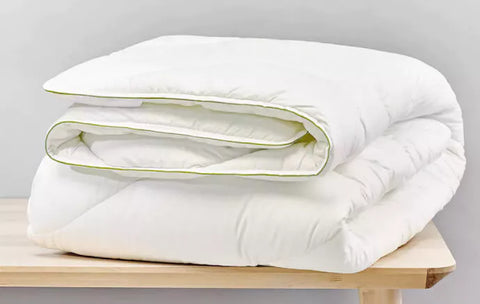
Which duvets are there in Pakistan?
There are different duvets for every season , which differ in filling and weight and are assigned to different heat classes. Whether summer duvets, winter duvets, combination duvets or 4-season duvets, let's first get an overview of the different types of duvets in our duvet guide.
Summer duvets : Summer duvets are light, have less filling and are particularly breathable. Lightweight duvets have a weight of 200 g/m2 to 250 g/m2 and are suitable for summer and for people who get warm quickly at night. (heat class 1 and 2)
Winter duvets : Winter duvets have a lot of filling material and have a heat-insulating effect. Linvosges has warm and very warm duvets in its range, which have a weight of 300 g/m2 to 350 g/m2 and 360 g/m2 to 400 g/m2 respectively. (heat class 4 and 5)
All-season duvets : All-season duvets, as the name suggests, can be used all year round. These well-tempered duvets usually have a weight of 250 g/m2 to 300 g/m2. (heat class 3)
Combination duvets : Combination duvets are 4-season duvets and consist of two interconnected duvets (a summer duvet and an all-season duvet), which you can also use individually. Heat class 1 to 5 - depending on how the duvet is combined.
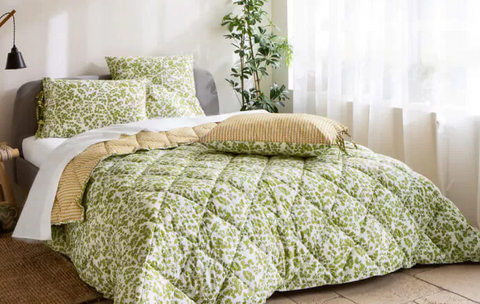
Which is better, down comforter or synthetic?
Whether a duvet made of down feathers or synthetic fibers is suitable for you depends on your warmth needs . Night sweats and allergies also play a role. We have listed the advantages and disadvantages of the individual fillings in our duvet guide so that you know which material ensures a comfortable sleeping environment for you.
Down comforters
Down duvets provide a lot of warmth , are light and cozy and are characterized by medium to good moisture permeability . In terms of quality, good goose down is significantly better than duck down. However, if you sweat a lot and don't like it that cozy and warm, you shouldn't use down and feathers.
Synthetic duvets
Synthetic comforters are primarily made from polyester hollow fibers. They are extremely light and offer good thermal properties , but compared to down duvets, they do not wick away moisture well . So if you already have a tendency to sweat at night, you should not buy duvets with polyester filling.
Cotton duvets
Duvets filled with cotton tend not to keep you as warm and are ideal for people who sweat easily . For duvets with cotton filling, you should definitely make sure to buy certified organic cotton , otherwise there is a risk of insecticide contamination.
Silk duvets
Duvets with a silk filling have incomparable properties. They are light and supple and ensure temperature-regulating sleeping comfort. Since silk can absorb a lot of moisture and provides less warmth, silk duvets are ideal for people with little need for warmth.
Linen duvets
Linen has a cooling effect and has proven to be an excellent natural fiber for filling duvets. Thanks to its excellent moisture transport, linen ensures a balanced and dry sleeping environment and is ideal for light summer duvets.
Camel hair duvets
Camel fluff is a high-quality filling material with excellent thermal properties and very good moisture management. Camel hair is ideal for people who sweat a lot, as well as for sleepers who need a lot of heat . However, this filling material is not an option for people with animal hair allergies.
Are you also looking for the right bed linen for your duvets? At Linvosges you will not only find blankets made from matching materials, but also wonderful bed linen that will give your bedroom an individual touch!
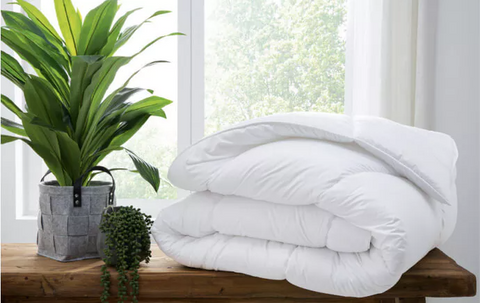
Which duvet makes you sweat the least?
Duvet tests have shown that cotton or linen 's moisture-regulating properties are suitable for people who sweat heavily at night. If you sweat a lot, silk blankets are even better. Down and feathers, on the other hand, are less advisable because they absorb moisture but do not wick it away as well as silk, cotton or linen.
What size should a duvet be?
The duvet sizes depend on your height and the mattress dimensions. The bigger the person or the mattress, the bigger the duvet. The rule of thumb is: the blanket should be 30 centimeters longer than you . The standard size of a duvet is 135 x 200 centimeters. So if you are taller than 180 centimeters, then choose a duvet that is 220 centimeters long. In addition, the comfort aspect is crucial when it comes to duvet sizes . If you love to snuggle up and a standard duvet is too small, then choose an oversized duvet measuring 155 x 220 centimeters. Couples who don't want individual duvets also opt for oversized duvets. Partner blankets measuring 200 x 200 centimeters are perfect for wonderful nights for two.
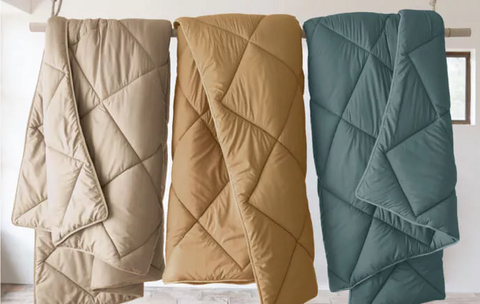
5 Important tips about duvets
- Tip #1 Guide for duvets: Pay attention to moisture absorption
- At night we release 500 milliliters of water vapor through our skin. A good duvet must be able to absorb this moisture and pass it on to the air in the room in order to avoid a build-up of moisture. Synthetic blankets absorb very little moisture, whereas natural hair blankets (sheep's wool, cashmere, camel down) and plant fiber blankets (cotton, silk, hemp, linen or wood cellulose) absorb a lot of moisture but are less fluffy.
- Tip #2 Duvet guide: Select fillings based on how warm you feel
- Choose your filling according to your personal feeling of warmth. Remember that down, merino, cashmere and camel down are suitable if you are more likely to feel cold at night. Use silk, cotton or linen if you need little warmth.
- Tip #3 Guide for duvets: pay attention to the quilting
- While a cassette duvet (bridge duvet) prevents cold spots and is ideal as a winter duvet or all-season duvet, the pull-in duvet is used as a light summer duvet.
- Tip #4 Guide for duvets: Balanced, slightly cooler temperature
- We use our body heat to heat the air under the blanket. A slightly cooler temperature of 32 degrees is ideal. A good blanket should be able to maintain this temperature. Also make sure that the room temperature in the bedroom is not too high.
- Tip #5 Guide to duvets: Alone or as a couple under the blanket?
- If you share an oversized couple's duvet, keep in mind that you will give off heat to each other and choose a duvet with less filling.

Conclusion: Choose duvets according to individual needs
When choosing the right duvet, factors such as your own level of warmth, filling material, weight and size play a crucial role. Follow our duvet guide and find the right duvet for your well-being. Always use duvet covers to protect your duvet from dust and stains.
To ensure that not only your duvets meet your individual wishes and ideas, choosing the right bed linen is also crucial. Whether silk, linen, satin, cotton or elegant percale - the covers should have the same comfort properties as your duvets.
Frequently Asked Questions About Duvets
What is a duvet?
A duvet is a soft, flat bag filled with down, feathers, or synthetic fibers. It’s used as the top layer of bedding and usually goes inside a removable cover.
What’s the difference between a duvet and a comforter?
A duvet is an insert designed to be used with a washable cover, so you launder the cover rather than the duvet itself. A comforter is a single piece of bedding, often sewn with a decorative outer fabric, and is usually used on its own. Duvets are easier to restyle and keep clean, while comforters are simpler to set up.
What’s the difference between a duvet and a duvet cover?
The duvet is the insert that provides warmth. The cover is a removable “pillowcase” for it that protects it from dirt and lets you change the look of your bed.
What are duvets filled with?
- Down (goose or duck undercoating): very light, warm, and long-lasting, but pricier.
- Feather: heavier and less insulating than down, but more affordable.
- Down alternative / synthetic (polyester microfiber): hypoallergenic, machine washable, and budget-friendly.
- Wool: temperature-regulating and moisture-wicking, good for people who run hot.
- Cotton, silk, or bamboo: breathable, with silk being a luxury option.
What does “fill power” mean?
Fill power measures how much space one ounce of down occupies, which indicates its quality. Higher numbers (600 to 800+) mean fluffier, warmer, and lighter down, so you need less of it for the same warmth.
What is a tog rating?
Tog is a measure of thermal insulation, common in the UK and Europe. A higher tog means a warmer duvet.
- 1 to 4.5 tog: summer weight
- 7 to 10.5 tog: all-season
- 12 to 15 tog: winter weight
Which duvet weight should I choose?
Think about your climate, your bedroom temperature, and whether you sleep hot or cold. A mid-weight (all-season) duvet suits most people. Hot sleepers may prefer a lightweight or wool option, and cold sleepers a winter weight. Some brands sell two-part duvets that clip together for year-round use.
What size duvet do I need?
Match the duvet to your mattress size (twin, full, queen, king, and so on). If you want a more generous drape, or share the bed and don’t want to fight over covers, size up. Standards vary by country, so check the dimensions in centimeters or inches rather than relying on the name alone.
What does “baffle box” or “sewn-through” construction mean?
In a sewn-through duvet, the top and bottom layers are stitched directly together, which can create cold spots along the seams. Baffle box construction uses fabric walls between the layers, so the fill has room to loft and heat is distributed more evenly. Baffle box is generally warmer and higher quality.
How do I put a duvet in a cover?
- Turn the cover inside out and lay it flat.
- Place the duvet on top and match the corners.
- Tie or clip the corners together using the ties and loops, if the cover has them.
- Reach in through the opening, hold the duvet’s top corners, and flip the cover right side out, shaking it to settle the duvet.
- Fasten the closure.
How often should I wash my duvet and cover?
Wash the cover every one to two weeks, along with your sheets. The duvet itself needs washing only once or twice a year, or when it’s stained or smells musty.
Can I machine wash a duvet?
Many can be, but always check the care label. Use a large-capacity machine, a gentle cycle, and mild detergent. Dry on low heat with a few clean tennis or dryer balls to restore the loft, and make sure it is completely dry to prevent mildew. Very large or delicate duvets, especially down, may be better handled by a professional cleaner.
How should I store a duvet?
Store it clean and fully dry in a breathable cotton bag or container. Avoid vacuum-sealing or tightly compressing down duvets for long periods, since it can damage the fill.
How long does a duvet last?
A quality down duvet can last 10 to 15 years or more with proper care. Synthetic duvets typically last 2 to 5 years, as the fibers flatten over time.
Are duvets good for people with allergies?
Down alternatives and tightly woven, allergen-resistant covers can help, as can regular washing. Some people with sensitivities do better with synthetic or wool fill, but anyone with significant allergies should consult a doctor.
Why does my duvet shift or clump?
Fill can bunch up from use or washing. Fluff and shake it regularly, and use corner ties inside the cover. Baffle box construction also helps the fill stay evenly distributed.